
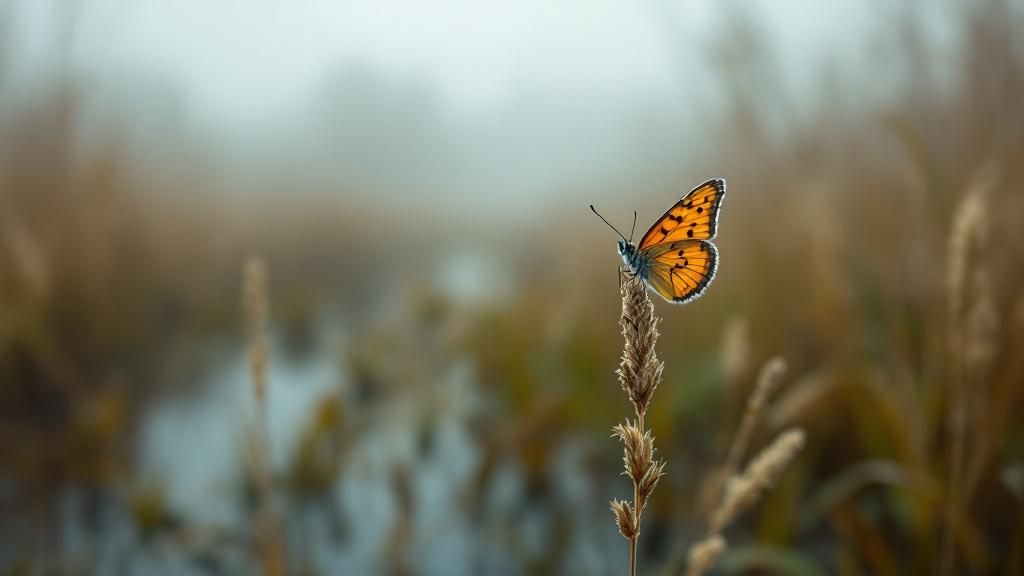
A conservationist in Wales is halfway through a pioneering two-year research project that could transform how we monitor the health of the nation’s peatlands. Georgina Paul, working with Butterfly Conservation, is examining whether the endangered large heath butterfly might serve as a dependable measure of peatland health across some of Wales’s most precious wetland environments. The project, which began last year and will continue to May 2027, requires counting large heath populations across hundreds of square kilometres of protected peat bogs, from Ceredigion to the Wrexham-Shropshire border. If successful, the research could provide volunteers with a straightforward yet powerful way to track environmental changes whilst also helping address climate change by guaranteeing these vital carbon stores remain healthy and intact.
The Great Heath as Ecological Indicator
The large heath butterfly, with its distinctive chestnut colouring and striking black spots, has become the focus of this extensive conservation initiative because of its highly specialised environmental needs. Found exclusively in damp peatland habitats across northern Britain, Ireland, and a small number of scattered Welsh and English locations, the species is entirely dependent on a sole food plant: hare’s-tail cottongrass, a plant that exists only in peat bogs. This high degree of specialisation makes the large heath an perfect ecological indicator—where the butterfly thrives, the peatland ecosystem is functioning well, and carbon storage stays protected.
Georgina Paul argues that by training volunteers to conduct simple weekly butterfly surveys along established pathways, Butterfly Conservation can gather invaluable data on wetland condition without demanding technical skills. The approach converts volunteers into conservation observers, democratising conservation science across wetlands throughout Wales. Should the large heath demonstrate itself to be a trustworthy measure, the project could fundamentally change how land managers and conservation organisations tackle peatland conservation, providing clear, visible evidence of conservation gains or losses that informs upcoming conservation approaches.
- Large heath caterpillars feed exclusively on hare’s-tail cottongrass plants
- Species numbers declined significantly during the twentieth century
- Now classified as threatened in England and Wales
- Restricted to damp environments in northern British regions
Monitoring Advancement Across Welsh Wetland Regions
Georgina Paul’s two-year investigation, currently halfway through its timeline until May 2027, encompasses an ambitious geographical scope that extends throughout Wales’s most significant peat bog areas. Her team has been systematically monitoring large heath populations from the start of the initiative last year, conducting regular weekly assessments along predetermined routes to collect consistent, comparable data. This systematic method enables scientists to identify patterns in butterfly abundance that correlate directly with peatland condition, creating a long-term documentation of how these delicate habitats react to conservation work and environmental pressures. The sheer scale of the project—spanning extensive areas of conservation land—represents one of the most extensive butterfly survey programmes Wales has undertaken in recent years.
The research team is particularly interested in pinpointing quantifiable gains at sites where conservation efforts has already started, seeking solid confirmation that protective actions are yielding positive results for both the large heath and the overall wetland habitat. Beyond conventional species surveys, the project is pioneering cutting-edge methods, testing drones to chart habitat distribution and swiftly pinpoint significant plant communities. This blend of volunteer-led fieldwork and state-of-the-art aerial mapping creates a solid surveillance structure that can record habitat variations with unprecedented accuracy, ultimately providing land managers and environmental organisations with the data necessary to make informed management decisions.
Key Investigation Sites and Territorial Reach
- Cors Caron near Tregaron in Ceredigion, a significant peatland conservation area
- Afon Eden in Gwynedd, safeguarding extensive heath communities in northern Wales
- The Berwyn Range in north-east Wales, covering multiple habitat types
- Fenn’s, Whixall and Bettisfield Mosses NNR near Wrexham
- All designated reserves where large heath butterfly populations are now present
Why Peatland Condition Matters Globally
Peatlands constitute one of Earth’s most critical carbon sequestration mechanisms, yet their significance remains underestimated in broader climate discussions. These wet environments build up partially decomposed plant material over millennia, trapping vast quantities of carbon that would otherwise add to atmospheric greenhouse gases. When peatlands stay wet and intact, they act as highly effective carbon sinks, sequestering carbon at rates far surpassing most other terrestrial habitats. However, this delicate balance is increasingly threatened by rising global temperatures, which deplete moisture from peat bogs and trigger the release of stored carbon into the atmosphere, establishing a feedback loop that accelerates climate change.
The deterioration of peatlands has cascading consequences that extend far beyond carbon emissions. Damaged peat bogs lose their capacity to support specialised wildlife, including uncommon species like carnivorous sundews and emperor moths alongside the large heath butterfly. Furthermore, healthy peatlands provide essential ecosystem services including water filtration, flood control, and nutrient recycling that benefit human communities downstream. By monitoring large heath populations as a barometer for peatland condition, conservationists can identify degradation early and carry out restoration measures before irreversible damage occurs. This preventative method transforms butterfly surveys into a practical tool for protecting both biodiversity and climate resilience.
| Peatland Benefit | Environmental Impact |
|---|---|
| Carbon Storage | Stores more carbon per hectare than forests; wet peatlands prevent greenhouse gas release |
| Biodiversity Support | Provides habitat for specialised species including endangered butterflies and carnivorous plants |
| Water Management | Filters water naturally and regulates flood risk through water absorption and gradual release |
| Climate Regulation | Contributes to global climate stability by maintaining carbon sequestration rates |
Restoration Efforts and Outlook Ahead
Georgina Paul’s two-year study, funded with £249,000 from Welsh government sources, is deliberately concentrated on sites where restoration work has already commenced. By concentrating efforts on these locations, researchers can measure whether active management translates into measurable benefits for large heath butterfly populations. The project covers all protected peatland areas where the butterfly is found, including Cors Caron near Tregaron in Ceredigion, Afon Eden in Gwynedd, the Berwyn Range in north-east Wales, and the Fenn’s, Whixall and Bettisfield Mosses National Nature Reserve near the Wrexham-Shropshire border. This comprehensive geographical approach ensures that findings reflect varied restoration methods across the Welsh peatland network.
The research extends beyond traditional field surveys, incorporating advanced technological solutions to accelerate environmental protection work. Drones are being trialled to map peat bog habitats and locate key plant species, particularly hare’s-tail cottongrass, which forms the sole food source for large heath caterpillars. This advanced approach has the potential to streamline habitat assessment and allow conservation professionals to respond more rapidly to environmental changes. If the study conclusively shows that large heath butterflies serve as reliable indicators of peatland condition, the results may transform monitoring practices across the UK and give property managers with practical, evidence-based guidance for sustainable peatland management.
Volunteer-Powered Monitoring and Advancement
Central to the project’s success is the engagement and development of participants who conduct weekly walks along established pathways, methodically documenting butterfly populations throughout the peak summer period. This community-led initiative opens up environmental science, enabling untrained individuals to participate actively in environmental monitoring. Georgina stresses that contributors lack the need for technical expertise to create essential datasets; their consistent observations establish a comprehensive database for tracking peatland condition throughout the study period. By engaging local populations to participate directly in conservation, the project builds public engagement whilst collecting data necessary to inform forthcoming habitat safeguarding approaches.
