
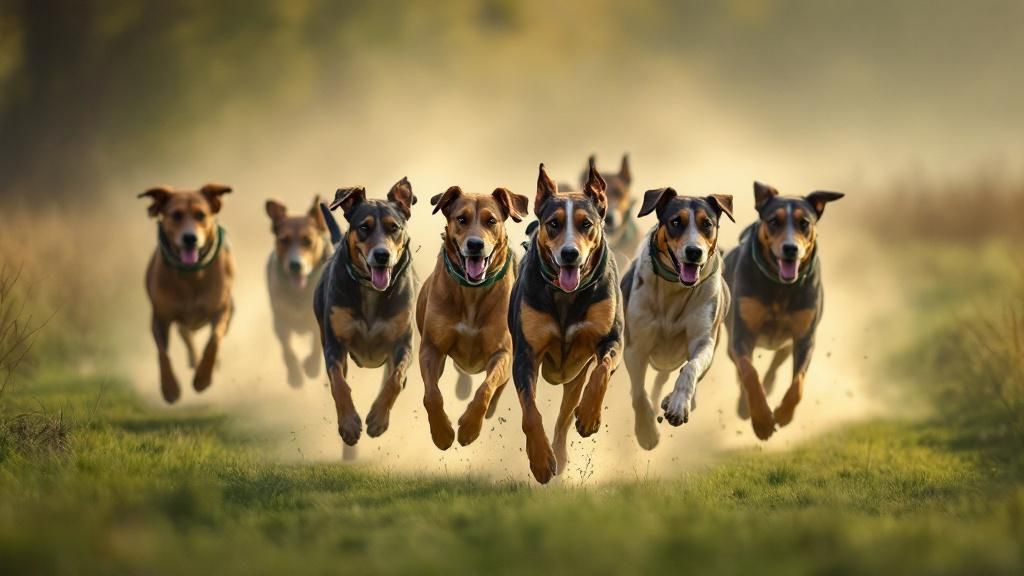
The government has initiated a consultation process on banning trail hunting in England and Wales, marking a important milestone towards fulfilling a key election pledge. Trail hunting, which entails using animal-scented rags to lay a trail for hounds to follow, was established as a legal alternative to fox hunting following the Hunting Act 2004. However, animal welfare campaigners argue the practice is frequently employed as a cover to mask unlawful hunting, with packs commonly picking up live animal scents instead. The consultation, announced on Thursday, occurs as the government moves closer to putting in place the ban it committed to in its 2024 election manifesto, in spite of fierce opposition from rural communities and hunting organisations who maintain the measure would jeopardise jobs and local economies.
What is trail-hunting activity and why the controversy carries weight
Trail hunting emerged as a lawful settlement after the 2004 Hunting Act, which prohibited the traditional practice of using packs of hounds to chase and kill foxes. The activity entails laying a scent trail with an animal-scented rag, which the hounds then track through rural areas. Proponents argue this offers rural communities with a legitimate recreational pursuit that maintains countryside practices and supports local economies. Hunt groups maintain that trail hunting, when conducted properly, permits them to pursue their traditional pursuits whilst complying with the law and animal welfare standards.
Animal welfare organisations dispute these claims, providing evidence that trail hunting regularly serves as concealment for illegal fox hunting. They assert that packs consistently abandon the synthetic scent path to chase live animals, placing wildlife, domestic pets and livestock at risk. Campaign groups such as the RSPCA and the League Against Cruel Sports assert that across more than twenty years, hunts have repeatedly broken the law with minimal consequences. This fundamental disagreement over whether trail hunting truly protects animal welfare or masks illegal activity has become the centre of the current debate.
- Trail hunting utilises scent-soaked cloths to create artificial scent trails
- Presented as a legal alternative following the 2004 Hunting Act ban
- Animal welfare groups claim it conceals illegal fox hunting operations
- Country areas maintain it sustains regional economic activity and countryside traditions
Government consultation opens door to policy reform
The initiation of the stakeholder engagement process on Thursday represents a significant milestone in the government’s commitment to fulfil its 2024 election campaign commitment. The consultation period will enable stakeholders from all sides of the debate—including animal protection campaigners, rural communities, hunt organisations and the wider population—to present their perspectives on the proposed ban. This structured procedure is essential before any legislation can be drafted and laid before Parliament, making it a critical juncture where evidence and arguments will be formally recorded and assessed by decision-makers weighing up the merits of the prohibition.
The government’s choice to proceed with the consultation despite strong objections from rural campaigners signals its resolve to advance the ban. Animal protection groups have capitalised on the consultation launch as an opportunity to strengthen their case, with groups like the League Against Cruel Sports characterising it as a “critical juncture” for animal protection. However, the Countryside Alliance has cautioned that moving ahead risks damaging relationships between government and countryside populations, contending that the ban would represent an unwarranted attack on rural customs and the countryside economy that depends upon hunting-related activities.
Consultation questions under review
- Whether trail hunting functions as a legal alternative to conventional fox hunting practices
- Evidence of trail hunting being misused as a front for unlawful fox hunting
- Economic impact on countryside areas and rural business sectors and job creation
- Effectiveness of existing enforcement systems in tackling illegal hunting practices
- Public opinion on balancing animal welfare concerns with countryside community needs
Rural communities express deep anxieties regarding financial consequences
Rural campaigners have mounted a forceful defence of trail hunting’s contribution to countryside economies, with the Countryside Alliance calculating that hunts channel approximately £100 million annually into rural areas through immediate expenditure and related ventures. Hunt organisations argue that the proposed ban threatens not only the customs supporting rural communities for centuries, but also the incomes of people relying on hunting-related tourism, employment and community enterprise. The Alliance argues that the government’s consultation, whilst seeming open in nature, represents a pre-planned assault on rural life that fails to acknowledge the real financial and community benefits these activities deliver for isolated communities.
Mary Perry, joint master of the Cotley Harriers hunt in Somerset, expressed the frustration felt by hunt communities who believe they operate within the law and follow all regulatory guidelines. She emphasised that countryside activities arranged by hunts fulfil a vital social function, uniting people from across the region for activities that reinforce local connections. Perry’s comments highlight broader concerns amongst rural stakeholders that the government is dismissing legitimate concerns from countryside communities without adequately considering the consequences of a ban on country jobs, tourism revenue and the cultural heritage associated with hunting traditions spanning generations.
| Stakeholder Position | Key Arguments |
|---|---|
| Countryside Alliance | Ban is unnecessary and unfair; threatens £100m rural economy; attacks rural communities; hunts follow guidelines and bring people together |
| Animal Welfare Campaigners (RSPCA) | Trail hunting used as smokescreen for illegal fox hunting; puts wild animals and livestock at risk; enables continued law-breaking |
| League Against Cruel Sports | Hunts have broken the law for over 20 years; ban necessary to allow courts and police to tackle illegal hunting; pivotal moment for animal welfare |
| Hunt Masters | Legitimate activity conducted lawfully; provides community gatherings and social cohesion; criticisms of trail hunting are frustrating and unjustified |
Hunt officials defend their traditions
Those prominent hunt organisations have regularly maintained that trail hunting, as currently practised by legitimate hunt groups, represents a legal and ethical alternative to the fox hunting banned in 2004. Hunt masters argue they adhere strictly to the Hunting Act’s provisions and operate in accordance with established guidelines designed to ensure responsible practice. They contend that animal welfare concerns, whilst acknowledged, are based on anecdotal evidence rather than rigorous evidence of widespread abuse, and that the vast majority of hunts operate transparently and with genuine dedication to animal welfare standards.
The defence of trail hunting extends beyond mere legality to encompass broader arguments about countryside traditions and local identity. Hunt masters stress that their activities preserve long-established customs that characterise rural character and offer substantive jobs and social structures in areas where other employment prospects are scarce. They argue that treating all hunts identically of illegality is deeply unfair, especially since many hunt communities have invested considerable effort in adapting their practices after the 2004 Hunting Act to remain within the law whilst maintaining their cultural traditions.
Animal welfare supporters call for tougher protections
Animal welfare groups have taken advantage of the government’s consultation as a vital opportunity to strengthen legal protections against what they characterise as systemic cruelty masquerading as legitimate sport. The RSPCA and League Against Cruel Sports argue that extensive evidence proves trail hunting operates as a convenient pretence, allowing hunt groups to continue pursuing foxes with packs of hounds whilst nominally adhering to the letter of the 2004 Hunting Act. These campaigners argue that actual prey scents regularly distract hounds from the intended artificial trails, creating scenarios essentially the same as illegal fox hunting and leaving current enforcement mechanisms unable to function.
Advocates for a trail hunting ban stress the wider implications of what they view as systemic law-breaking within rural hunting communities. They draw attention to worries that go further than foxes to include risks posed to household animals and farm stock, together with reports of intimidation and anti-social behaviour aimed at those opposing hunts. The League Against Cruel Sports has framed the consultation as a critical turning point, contending that tougher laws would finally empower courts and police to properly pursue repeat violators rather than perpetually chasing the same violations. For these organisations, a comprehensive ban constitutes not merely animal welfare progress but vital safeguards for countryside communities in particular.
- Trail hunting permits continued fox hunting under the guise of lawful conduct, campaigners argue
- Existing enforcement systems prove inadequate to differentiate genuine from illicit hunting activities
- Tougher laws would enable authorities and courts to prosecute persistent law-breaking with greater effect
What happens next in the law-making process
The public consultation began on Thursday marks the opening stage towards enacting Labour’s electoral pledge to outlaw trail hunting across England and Wales. The government will obtain responses from key organisations, including hunt organisations, animal welfare groups, rural communities and the wider population, before determining the detailed regulatory approach. This consultation phase is intended to ensure that any suggested prohibition considers real-world consequences and responds to concerns expressed by both supporters and opponents of the measure.
Following this consultation phase, the government is anticipated to draft formal legislation that would alter or overturn the 2004 Hunting Act. The timeline for parliamentary consideration and passage remains uncertain, though the government’s stated commitment suggests this matter will feature significantly in the parliamentary agenda. Once enacted, new laws would provide clearer definitions of banned hunting practices and equip enforcement agencies with increased powers to enforce against violations, fundamentally reshaping the legal landscape for rural hunts working throughout rural Britain.
