
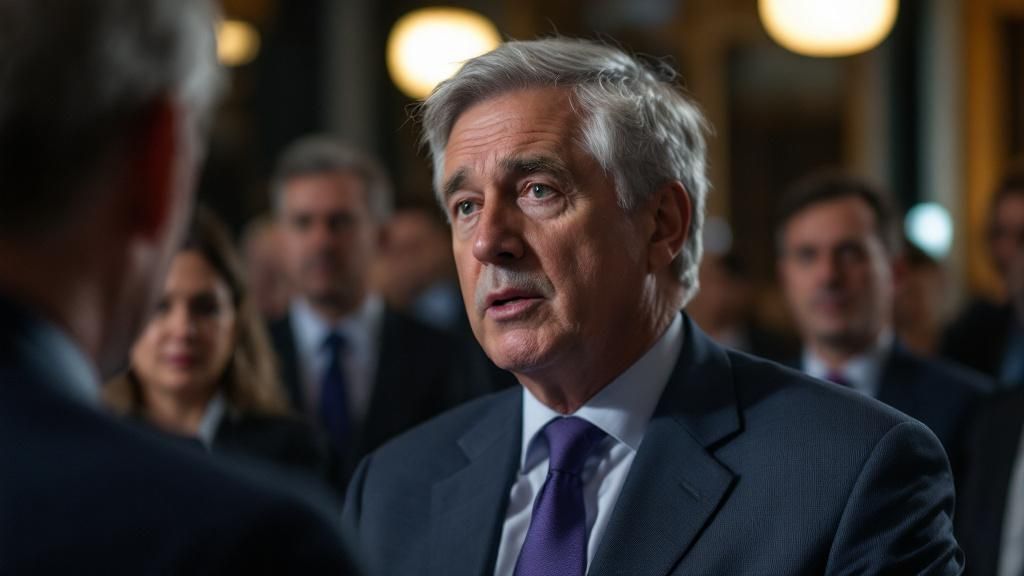
As families throughout the country struggle with soaring energy bills and inflation reaching record levels, the Labour leader has initiated a fierce attack on the Government’s response to the cost-of-living emergency. In a tense Commons clash, the opposition has challenged the administration’s insufficient support measures, pressing for more meaningful support to help financially stretched families. This article explores the mounting divisions centred on the crisis and investigates the rival visions for economic assistance.
The Opposition party’s Criticism of State Policy
The opposition leader has increased pressure of the government’s response to the mounting cost-of-living emergency, arguing that present interventions fall woefully short of addressing the scale of hardship impacting British families. In parliamentary debate, the opposition has articulated a thorough analysis spanning inadequate financial support, limited involvement in energy markets, and a apparent shortage of urgency in tackling inflation. The opposition maintains that whilst families contend with extraordinary costs, the government’s fragmented strategy only addresses surface issues rather than addressing root causes of economic hardship.
Central to the opposition’s position is the claim that the government has badly miscalculated both the severity and duration of the crisis. Opposition representatives have highlighted data showing that millions of households now endure genuine difficulty, with many forced to choose between keeping warm and feeding themselves. The opposition contends that the government’s initial response underestimated the crisis’s impact, leading to support mechanisms that turned out to be insufficient when circumstances deteriorated further. This miscalculation, they argue, reflects systemic weaknesses in economic prediction and policy planning.
Insufficient Assistance Provisions
The opposition has directly criticised state assistance programmes as lacking in scope and precision, arguing that price regulation frameworks fall short of protecting those on lower incomes effectively. Critics point out that whilst the government has introduced multiple support measures, such as grants and council tax rebates, such provisions deliver limited reprieve without resolving underlying problems. The opposition maintains that means-tested benefits remain excessively narrow, leaving out millions of working families who yet face difficulties with rising costs. Furthermore, they argue the government’s approach lacks the boldness needed to address such an extraordinary financial crisis.
Opposition assessment suggests that present welfare systems unfairly harm middle-income households who sit outside eligibility thresholds for focused aid. The party has outlined new models incorporating unconditional income transfers, enhanced benefit programmes, and direct government intervention in power industries to maintain affordability. They highlight that interim steps, albeit positive, cannot substitute for comprehensive structural reform. The opposition maintains that without substantial legislative change and greater state spending, households will continue experiencing significant economic hardship in the coming period.
Extended Economic Strategy Concerns
Beyond immediate crisis management, the opposition has posed key questions regarding the state’s long-term economic direction and competitiveness. Opposition analysts argue that the present method prioritises short-term political optics over long-term economic sustainability, risking damage to Britain’s future prosperity. They contend that without targeted investment in clean energy infrastructure, productive capacity, and workforce development, the nation risks prolonged economic stagnation. The opposition emphasises that addressing cost of living pressures requires extensive reforms tackling productivity, creative advancement, and economic sector development alongside pressing relief measures.
The opposition has articulated concerns that government policy is fragmented across different sectors, with energy policy, industrial strategy, and fiscal measures functioning separately rather than as coordinated elements. Critics argue this fragmented approach impedes tackling of underlying inflationary pressures and structural economic weaknesses. The opposition calls for a coordinated national strategy encompassing energy transition, manufacturing revival, and skills development. They maintain that real problem-solving necessitates radical policy overhaul rather than modest changes to existing frameworks.
Government’s Defence and Counter-arguments
The government has steadfastly defended its economic strategy, arguing that the affordability pressures are largely driven by international forces beyond Westminster’s immediate reach. Ministers have underscored the extraordinary scale of the energy shortage, resulting from international tensions and worldwide supply chain interruptions. They argue that their focused assistance measures, including the price cap on energy and affordability support payments, embody a prudent and financially sound approach. The Government Treasury maintains that overspending could worsen inflation to a greater degree, damaging long-term financial stability and ultimately prejudicing the same families the opposition claims to champion.
Government representatives have highlighted the significant monetary support currently in place, reaching billions of pounds in direct support to those in need. They argue that their approaches balance short-term assistance with responsible financial stewardship, preventing the debt spiral that uncontrolled expenditure could cause. Ministers also highlight their efforts in boosting energy security through renewable investments and market diversification. The government contends that whilst the opposition offers sympathetic language, their proposed solutions lack economic credibility and would become unaffordable without raising tax rates or additional debt.
Furthermore, government officials highlight their resolve to confronting core economic problems through productivity improvements and enterprise investment schemes. They argue that enduring recuperation requires structural economic reforms rather than immediate financial relief. The administration considers this strategy ultimately delivers enhanced economic wellbeing and protection for the entire population.
